


Some New York places impress you by their size. Others win you over by their discretion. Wave Hill belongs to the second category. Set high above the Hudson River in Riverdale, in the northwest Bronx, it is one of the city’s most graceful escapes: part public garden, part cultural center, part historic estate, and part lookout over a version of New York that feels older, slower, and more contemplative than the city we think we know.
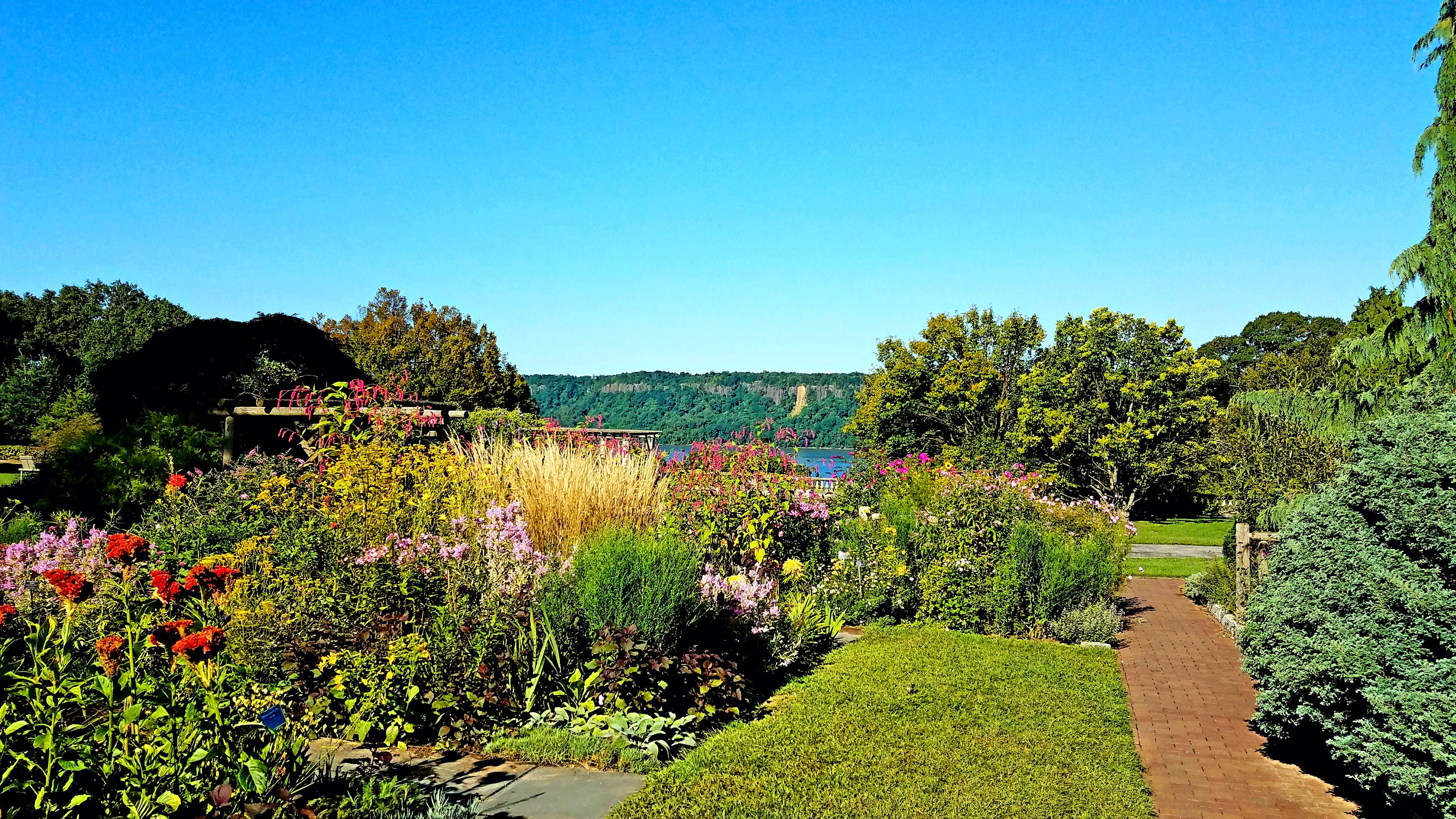
Wave Hill is not hidden in the sense that it is unknown. Garden lovers know it. Bronx residents know it. Artists, birders, walkers, and careful New Yorkers know it. But it still feels like a secret because arriving there requires a small psychological shift. You leave behind the obvious city—the grid, the speed, the vertical pressure—and enter a place shaped by slopes, stone walls, greenhouses, old houses, clipped gardens, woodland paths, and wide views across the Hudson toward the Palisades.
The estate’s history gives the place its unusual texture. Wave Hill House was built in the early 1840s by William Lewis Morris and Mary Elizabeth Babcock Morris, in a Greek Revival style, using gray fieldstone. The house was completed in 1844, and later owners expanded the grounds and gardens. Over time, the estate attracted a remarkable cast of residents and visitors, including Theodore Roosevelt’s family, Mark Twain, and conductor Arturo Toscanini. Today, those layers of history remain present, but lightly. Wave Hill does not feel like a frozen mansion museum. It feels alive, cultivated, and quietly inhabited by memory.
Since becoming a public garden in 1965, Wave Hill has developed a mission that combines horticulture, education, art, and environmental awareness. Its own description emphasizes the “artistry and legacy” of its gardens and landscapes, the preservation of its views, and the exploration of human connections to nature. That may sound institutional, but on the ground it translates into something very simple: a place where beauty is not merely decorative, but civic.
