



READING TIME is a quiet corner designed for unhurried attention. Here, classical literary pieces are not merely presented—they are narrated, carefully voiced, and shaped as an intimate experience for the listener.
Each selection is chosen for its lasting resonance: short stories, essays, fragments, and reflections that have survived time because they still speak to us. The narration is crafted specifically for this space, with pacing, tone, and pauses that respect the rhythm of the text and the intelligence of the audience. It is less a performance than a conversation—measured, attentive, and personal.
READING TIME invites readers to step away from scrolling and skimming, and into the slower pleasure of being read to. Whether listened to during a commute, a late evening at home, or a quiet moment between obligations, these narrations offer a return to literature as a shared act—one voice, one text, one listener at a time.
This section exists for those who believe that words deserve time and that listening can be a form of reading.
This week, we present “Down Pens” by H. H. Munro (Saki).
Just click PLAY and start reading.
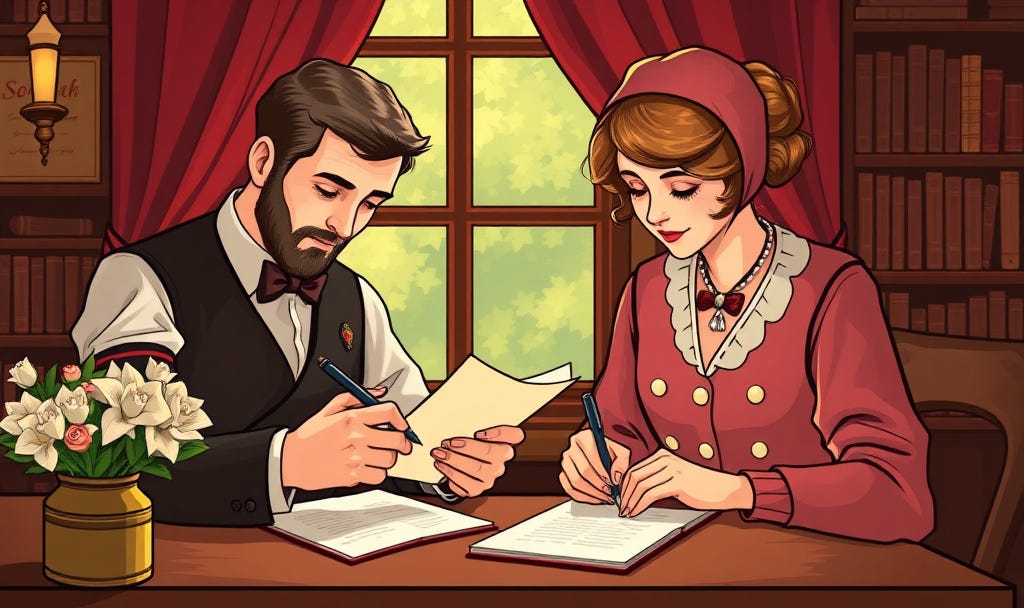
SAKI addresses the important question:
Is the pen actually mightier than the sword?
“Have you written to thank the Froplinsons for what they sent us?” asked Egbert.
“No,” said Janetta, with a note of tired defiance in her voice; “I’ve written eleven letters to-day expressing surprise and gratitude for sundry unmerited gifts, but I haven’t written to the Froplinsons.”
“Some one will have to write to them,” said Egbert.
“I don’t dispute the necessity, but I don’t think the some one should be me,” said Janetta. “I wouldn’t mind writing a letter of angry recrimination or heartless satire to some suitable recipient; in fact, I should rather enjoy it, but I’ve come to the end of my capacity for expressing servile amiability. Eleven letters to-day and nine yesterday, all couched in the same strain of ecstatic thankfulness: really, you can’t expect me to sit down to another. There is such a thing as writing oneself out.”
“I’ve written nearly as many,” said Egbert, “and I’ve had my usual business correspondence to get through, too. Besides, I don’t know what it was that the Froplinsons sent us.”
“A William the Conqueror calendar,” said Janetta, “with a quotation of one of his great thoughts for every day in the year.”
“Impossible,” said Egbert; “he didn’t have three hundred and sixty-five thoughts in the whole of his life, or, if he did, he kept them to himself. He was a man of action, not of introspection.”
“Well, it was William Wordsworth, then,” said Janetta; “I know William came into it somewhere.”


